 July-August
'07 |
briefing |
mail | interviews
| articles |
psorchat
| psorchat review |
don't
say this |
flaker
creativity | flakers' jargon |
other
places | archives | send
mail | ed dewke | search |
acknowledgments
| legal
stuff
| ©2007 Ed
Dewke July-August
'07 |
briefing |
mail | interviews
| articles |
psorchat
| psorchat review |
don't
say this |
flaker
creativity | flakers' jargon |
other
places | archives | send
mail | ed dewke | search |
acknowledgments
| legal
stuff
| ©2007 Ed
Dewke
|
FlakeHQ
Interviews:
Mike BailinCyberflaker
Interviewed by Ed
Dewke
In ’71, Bailin moved to Canada. There was an influx of young American men moving to Canada around that time to avoid being drafted into the Viet Nam “conflict.” But that wasn’t Bailin’s reason. He’d already obtained a medical deferment for his psoriasis. “The specific impetus was tax delinquency — I suddenly found all my checks bouncing because the IRS had lovingly seized my bank account. So using a handy guidebook put together by the Quakers, I applied for immigration up here, and was accepted primarily because I had a written job offer from a patent law firm in Toronto. “I'm still a U.S. citizen after 35-plus years up here, but I'll probably finally give in on that one and become Canadian. The new photo-ID card for permanent non-citizen residents is a nifty idea (I've still got my tattered old folded-up landing certificate that at least for the moment can still be used for cross-border travel by car), but it's MUCH easier (and cheaper) to get citizenship than one of those. And given the socialized medicine system nearly everywhere up here, I don't foresee returning to the U.S. except on visits.” Fortunately for most of us who flake, the Internet has helped diminish the constriction of international borders, and Mike Bailin is a regular presence in our flaking cyber-world, including FlakeHQ and PsorChat. A list of links to Mike’s contributions here can be found at the end of this interview. -Ed *****
Ed: Please give us some background on your own case of psoriasis.
How long have you had it? How did it first manifest? Was it diagnosed
quickly or the opposite? What have you used to manage it? How
successful is your management of it these days?
No
medical attention, even for firm diagnosis, until quite a bit later, and
that was simply to satisfy employers that it wasn't a contagious
condition hazardous to co-workers. There was always an awareness that
psoriasis and other skin problems ran in the family. Odd pattern in my
own family, most commonly passed from grandparent to grandchild with the
"skipped" generations typically suffering from eczema or similar
problems.
About
the only addition in recent years has been the use of topical cortisone
ointment when needed for relief of itch-discomfort. A couple of visits
back to my current derm, we agreed that if that was the only benefit I
was getting from it, we might as well shift to a milder version to
reduce the likelihood of long-term problems. I'd always assumed that the buildup under my heels, and to a lesser extent the rest of my feet, was simply years of accumulated callus, since I've always preferred to go around barefoot at home. During my hospitalizations for erythrodermic psoriasis, years of psoriasis build-up on the bottoms of my feet cracked. I'm not sure if the cracks were caused by the erythro flares, or the treatment, or both or neither. Anyway, those large cracks opened almost the entire length of my feet, from the back of the heel to just behind the toes. I conned my wife into helping me enlarge this crack with a pair of thin barber-style scissors, and at that point we were able to peel the whole thing off in almost one piece, like some kind of monstrous sock. Getting it over the toes was very uncomfortable, borderline-painful, but the results were amazing. It was many weeks before I got even a hint of fresh scaling there. But the usual foot treatment involves working on the thickest chunks with the serrated knife. What the heck, while I get uneven chunks off, it does (for a while) encourage new semi-loose edges that I can play with.
Ed:
Tell us more about your
experience with erythrodermic psoriasis. Why is it
life-threatening?
Ed:
What’s it like to
obtain medical treatment for your P in Kitchener, Ont., Canada?
Ed: You have been participating for a long time in a number of online forums, including PsorChat, and over the years your posts have helped us contrive an image of Mike Bailin as a psoriatic who has experienced much and come out mellowed on this end. Despite the nearly life-threatening erythrodermic psoriasis bouts, you consistently downplay any stigmatizing effect our disease may have on your life. Has that always been the case? Was there a time where psoriasis controlled you? You survived an injury that left you brain-damaged. Does P take a backseat to the complications arising from that? Mike B: No question about it, I've always felt that for me, 99-plus percent of the time my psoriasis has been worse to look at than to have. And I wouldn't even categorize those erythro experiences as traumatic, because I didn't really understand the crisis (other than extreme discomfort) until long afterwards. The second hospital stay, in particular, was deliberately structured as a get-away-from-it-all, almost a vacation. The hospital was overall designed for long-term rehab, started out life in ancient history as a TB “asylum” — no ER (big warning sign to that effect over the front door), and the majority of residents other than in the derm unit literally lived there. There was a big lounge on the first floor, “Sam's Bar,” where we'd get together for coffee twice a day, sing-alongs one or two evenings a week, or just drop in and see who was there the rest of the time. And they managed to get the provincial government to make an exception for them back when the first hospital-smoking crackdowns came elsewhere. Not only was smoking permitted in the lounge, but there were even notices posted that if smoking bothered you, please go elsewhere. There's been, to the best of my memory, only two occasions where I've been in situations that were unsettling, if not exactly traumatic, and they both involved relating to other people. One involved a new girlfriend — things had started getting mildly intimate, and she suddenly asked “What's that?” When I told her, she said she was afraid she might turn out to be allergic to the flakes (a possibility, I'll admit, even if probably extremely remote) and she'd ask her tea-leaf reader (?!) for advice. Never did hear from her again. Oh well.
A few years later I phoned the city's parks and rec office (the overseeing office) and, more out of curiosity than anything else, asked if the situation had ever been resolved. The girl said she couldn't find a pertinent open file, but she'd check and get back to me. Obviously someone there must have had the brains to recognize a major situation, and kicked my inquiry all the way “upstairs.” A couple of days later I got a call from none other than the chairman of the city's executive board, profusely apologizing and thanking me for not making a formal complaint to the provincial human rights commission. He agreed that, had I done so, it would have been an open-and-shut case against them. And more seriously, he recognized that the city would likely no longer exist — the penalty for that kind of thing is per-day of the offense, and since it was still essentially unresolved after five years, the city probably would have been bankrupted and had to be absorbed into one of the other cities here.
I won't get too much here into the injury and what it did to my life — if anyone's interested, my story's at TBI-Home (formerly TBI-Chat), at http://tbihome.org/stories/mike_b2.htm . Oh, and for "outsiders", TBI is the acronym for “traumatic brain injury.”
Ed: I recall you mentioning before that you found a an alternative treatment possibility in your dog. What am I recollecting? Mike B: My pet chitzu is determined that my legs (all he can reach, unless I'm lying down) look wrong and he's gotta make 'em better. So he'll get himself comfy and lick at the plaque until it becomes transparent, more or less disappears, and he's satisfied he's been successful. And of course off for a hasty drink if he's picked up any loose flakes in the process. Who knows, maybe one of these years we'll rock medical science back on its heels and find that chitzu saliva really is a topical cure for psoriasis. Seriously, though, it really is surprisingly soothing to those psor-eczema patches on my legs, to the point where I can actually skip or at least put off using the cortisone afterwards.
Ed: I know you were a trial participant for an early version of Raptiva. Tell us about that experience. And did it completely cool you towards biologics? Mike B: That was certainly an interesting experience. Earlier (with the same doc) I'd been in the Phase 3 work on Sandimmune specifically for psoriasis, as contrasted with its existing approval strictly as a general immuno-suppressant. And the doc said that because my psoriasis was so stubborn and generally resistant, even if “severe” only in the sense of coverage area, he considered me his number-one choice for any new projects coming along. So along came what was originally called anti-CD11a, now Raptiva. In the beginning, anti-CD11a very often created extremely severe headaches, but my doc applied for me anyway. This was after my head injury, by the way, and was one of the extremely few times that the two problems overlapped. He told me that the manufacturer had rejected me "because of your head injury". I kidded him for ages afterwards that it wasn't clear whether they meant:
They later found that by using a half-strength starter dose, subsequent doses could be pretty much as strong as desired with virtually no risk of headaches. So at that point I was accepted into the program. And the stuff was incredible — not fast, but when it finally got going it cleared me up much better than any single med I'd ever been on before. And no problems (for me) with side effects, either. Apparently the most common side effect was hypertension, so that got checked every visit — and despite being somewhat overweight, generally a pretty sedentary lifestyle, and a fairly heavy smoker to boot, I typically “clocked in” at around 105/65. The doc said he'd only seen that once before in all his years of practice, and both times he was totally baffled. But as he put it, “As long as it stays that way, enjoy!” The problems came after terminating treatment but while still in the “official” post-treatment observation stage. Fairly severe flare-up, which at first (till Genentech had accumulated more data) the doc insisted couldn't possibly be related to the med, more likely from too much sun or whatever. The coverage was extensive enough to qualify me for the extended-treatment phase, which simply put me back on the med for a few more weeks but did a fair job of clearing it up. My head injury had wreaked havoc with my eye-hand coordination, so I opted out of giving myself the injections. Instead, I went into the office for the shots. One problem I did run into was skin ulcers on the outsides of my feet, mercifully one foot at a time. Typically they needed bandaged for many weeks before they'd suddenly heal, and if I was lucky I'd get a few months break till the next one started up. I couldn't go out at all, since I couldn't possibly get shoes on (and had trouble enough just with jeans), so naturally I was stir crazy — thank heaven for the Internet. My wife, who was seeing the same derm, raised hell with him since we hadn't a clue how much longer this would go on. So he phoned Genentech and let her speak to someone there. The rep there said that all known effects were out of the system after 7 months maximum, my case definitely sounded like a skin problem rather than underlying infection or circulatory problem, and (most interesting of all) they had no record of such a problem with anyone. Meaning, of course, the derm had taken it upon himself to choose not to report it even though the first one was while I was still in the observation phase — and that is NOT how proper research is done. It's their job, not his, to determine whether something is significant or not — even one lone case might justify an “... in extremely rare cases ...” notation in the literature. So that was the end of my relationship with him. And yes, I'd be highly reluctant to try another biologic. Partly because of my bad experience with the self-styled “expert,” of course, but also because I'm well aware that there's at least as much trial and error using them as with any other form of treatment, often with much more serious side- and after-effects.
Ed: What biologics do flakers have available to them in Canada? Mike B: As far as I know, we've got more or less the same ones here as in the U.S. Outrageously expensive, of course, but hopefully that'll improve once (a) R&D costs are recovered, and (b) they become more widely known and accepted and are produced in larger volumes.
Ed: What is “psor-eczema”? (It sounds like a doctor’s indecisive diagnosis.) Mike B: This was an unhesitant diagnosis or label, take your pick, from my current derm for a condition I've had for quite a few years on patches on the backs of my lower legs. Typically I'll get what seems like normal scaling but which won't come off clean, leaves a bleeder underneath no matter how gently I've encouraged it.
I've
asked many docs about this over the years, with all kinds of different
responses. Last time I was in the hospital I showed it to the house
physician (not a derm, by the way), and he said he thought it was a
capillary or other small blood vessel too close to the surface and I
should ask my family doc to have it cauterized.
Ed: What are your thoughts on alternative therapies for treating P
(e.g., diets, supplements, climatotherapy)?
Ed: As always, Mike, “texting” with you has been a joy. It would seem that some of the “breaks” life has tossed you would give you every excuse in the world to be a maladapted flaker, but you have been since the beginning of my association with you, and remain, one of the most “adapted-sounding” flakers I know. (And I’m even surprised I can say that after reading about how you peeled the skin off your feet as though it were a sock!) If I could, I’d close this interview with a chorus of the Roy Rogers Dale Evans’ favorite, “Happy Trails to You!” *****
From the Archives:
2002
2003
2005
2006
Mike Bailin is happy to receive
email at:
##### www.flakehq.com |
 Ed:
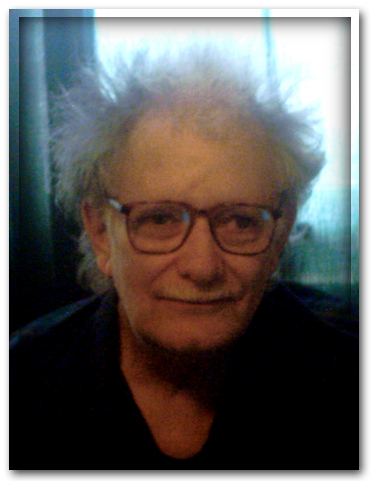
Mike Bailin was born in the 40s in New York. He was out of high school
and into the work force by the time he was seventeen and shortly
thereafter acquired a position with the U.S. Patent Office in
Washington, D.C. He claims to have lived at a famous address: “the
historic corner of East Capitol and 2nd — the Library of Congress on one
corner, the Supreme Court on another, Folger Shakespeare Library on the
third, and Mary Dobbins' rooming house on the 4th” (he lived
in the rooming house). During his time in D.C., Bailin took college
courses, learned a lot on the job about patent law, and also worked a
short time as a prison guard. “When I left the prison guard
job after six months (bored as
hell with it) I actually walked away with some performance commendations
on my record. Despite legends (or maybe actual truth some places), they
put far more value in good judgment than in kicking butt.”
Ed:
Mike Bailin was born in the 40s in New York. He was out of high school
and into the work force by the time he was seventeen and shortly
thereafter acquired a position with the U.S. Patent Office in
Washington, D.C. He claims to have lived at a famous address: “the
historic corner of East Capitol and 2nd — the Library of Congress on one
corner, the Supreme Court on another, Folger Shakespeare Library on the
third, and Mary Dobbins' rooming house on the 4th” (he lived
in the rooming house). During his time in D.C., Bailin took college
courses, learned a lot on the job about patent law, and also worked a
short time as a prison guard. “When I left the prison guard
job after six months (bored as
hell with it) I actually walked away with some performance commendations
on my record. Despite legends (or maybe actual truth some places), they
put far more value in good judgment than in kicking butt.”  Only two areas with which I have problems, and each are practically
whole stories in themselves. Patches on the backs of my lower legs are
what's most recently (after years of alternate ideas) been diagnosed as
psoreczema, and are very raw and itchy, so that's where the bulk
of the cortisone typically goes.
Only two areas with which I have problems, and each are practically
whole stories in themselves. Patches on the backs of my lower legs are
what's most recently (after years of alternate ideas) been diagnosed as
psoreczema, and are very raw and itchy, so that's where the bulk
of the cortisone typically goes. The
scariest part of my first erythro flare was the total mystery of it. My
psoriasis hadn’t been particularly uncomfortable; this was. It seemed
something entirely different than my psoriasis. Even my family doc was
baffled at first, and tried working on the assumption that it was
contact dermatitis. One approach he tried was interesting: oral
cortisone — didn't help the condition any, but it was amazing how many
almost unconsciously tiny aches and pains it cleared up while I was on
it.
The
scariest part of my first erythro flare was the total mystery of it. My
psoriasis hadn’t been particularly uncomfortable; this was. It seemed
something entirely different than my psoriasis. Even my family doc was
baffled at first, and tried working on the assumption that it was
contact dermatitis. One approach he tried was interesting: oral
cortisone — didn't help the condition any, but it was amazing how many
almost unconsciously tiny aches and pains it cleared up while I was on
it.  Part of
the problem is a conflict between the federal and provincial governments
about accepting docs from overseas. If a world-renowned specialist in
almost any field wants to come to Canada, Immigration will delightedly
welcome him with open arms. But the province, which looks after
licensing, may very well want him to go back to medical school here
almost from scratch to meet “our standards,” and many potential
immigrants will understandably think long and hard and quite likely
decide to make some other country their new home.
Part of
the problem is a conflict between the federal and provincial governments
about accepting docs from overseas. If a world-renowned specialist in
almost any field wants to come to Canada, Immigration will delightedly
welcome him with open arms. But the province, which looks after
licensing, may very well want him to go back to medical school here
almost from scratch to meet “our standards,” and many potential
immigrants will understandably think long and hard and quite likely
decide to make some other country their new home. The other one was
after my head injury and indirectly related to it, and could have made
front-page headlines. By way of background, my head-injury hospital
sent out an outreach worker to help me find ways to become at least
somewhat socially active again. I love playing cribbage, and one of the
local seniors' centers has games twice a week, so they struck a deal to
waive the minimum age for membership in my case since I was retired
anyway (and only 3 or 4 years shy of their minimum). So I quite happily
went twice a week for a couple of months. Then on one visit, when I
arrived I was pulled aside by a manager and told there had been
complaints from other players about my appearance, and please don't go
into the room. I tried to explain about psoriasis, and in particular
that it was definitely not contagious or anything like that, but he
didn't want to listen, so I dejectedly turned around and came back home.
The other one was
after my head injury and indirectly related to it, and could have made
front-page headlines. By way of background, my head-injury hospital
sent out an outreach worker to help me find ways to become at least
somewhat socially active again. I love playing cribbage, and one of the
local seniors' centers has games twice a week, so they struck a deal to
waive the minimum age for membership in my case since I was retired
anyway (and only 3 or 4 years shy of their minimum). So I quite happily
went twice a week for a couple of months. Then on one visit, when I
arrived I was pulled aside by a manager and told there had been
complaints from other players about my appearance, and please don't go
into the room. I tried to explain about psoriasis, and in particular
that it was definitely not contagious or anything like that, but he
didn't want to listen, so I dejectedly turned around and came back home. And yes, my head
injury definitely had a much greater effect on my life. Between
lifestyle and personality changes, for all practical purposes the “old
me” died back then. It's quite common, in head injury groups where I'm
active, to believe that part of proper rehab is to be able to properly
mourn the old self and carry on, and quite a few even take it one step
further, treating the injury as a new birth date.
And yes, my head
injury definitely had a much greater effect on my life. Between
lifestyle and personality changes, for all practical purposes the “old
me” died back then. It's quite common, in head injury groups where I'm
active, to believe that part of proper rehab is to be able to properly
mourn the old self and carry on, and quite a few even take it one step
further, treating the injury as a new birth date.