 July-August
'05 |
briefing |
mail | interviews
| articles |
psorchat
| psorchat review |
don't
say this |
flaker
creativity | flakers' jargon |
other
places | archives | send
mail | ed dewke | search |
acknowledgments
| legal
stuff
| ©2005 Ed
Dewke July-August
'05 |
briefing |
mail | interviews
| articles |
psorchat
| psorchat review |
don't
say this |
flaker
creativity | flakers' jargon |
other
places | archives | send
mail | ed dewke | search |
acknowledgments
| legal
stuff
| ©2005 Ed
Dewke
|
|
FlakeHQ
Interviews:
Sheila RittenbergDirector of Advocacy, National Psoriasis Foundation Interviewed
by Ed Dewke
***** ED: Your title at the National Psoriasis Foundation is “Director of Advocacy.” Advocacy, or advocate (noun OR verb) are words that sound political. Please tell us what the word means to the Foundation and what the Director of Advocacy is all about.
My job as Director of Advocacy is to set the strategy and put the pieces in place so that this public participation in psoriasis advocacy can have a meaningful impact. Sometimes I think of it as painstakingly finding and collecting the wood for an enormous bonfire. Once set up, we light the match — and poof! — everything ignites. Like the fire, this grassroots advocacy momentum will spread across the country. For the National Psoriasis Foundation, Advocacy is two-fold. Part 1 is on “Access” — improving the access that psoriasis patients have to treatments. Part 2 is “Political Advocacy” — influencing legislators so that the government gives more support (funding) to psoriasis. We set up the Advocacy department this way with kind of a Today-Tomorrow view. Today, there is an urgent need to open up access to treatments. People with serious psoriasis are not getting the treatments they need due to restrictive health insurance plans. Psoriasis is simply not on the map of private health insurance companies and government-aided health plans. Our job is to put it there. The second part of Advocacy — political or government affairs Advocacy — has to do with getting the kind of recognition, support and funding for psoriasis that is needed in order to produce more research, and eventually a cure. People think of this as “lobbying.” A big part of this does involve convincing Congress that the government should spend more money on psoriasis. But political advocacy, to be successful, has to be built from a multi-pronged base. At the Psoriasis Foundation, we believe mobilizing the grassroots to support what we're doing in Washington is essential. Through our support groups across the country, our annual Capitol Hill Day and our online organizing, and through the leaders on our Board of Trustees and Medical Board, we are beginning to make a difference. In the long run, political advocacy won't be sustained unless this base is solid. The other piece that we feel must be in place and that we are working on is building collaboration with the government agencies that in the end will have to implement what Congress tells them to do.
ED: The observation has been made many times, by many people, that psoriatics aren't very vocal as a group. We tend not to be “collective.” Do you believe that observation? What does that mean to your job? Rittenberg: This is my favorite question. It's true that we as a community do not have a voice. And do you know why? Psoriasis has long been a “silent disease.” People affected by psoriasis tend not to talk about psoriasis and its challenges. I grew up with psoriasis and in those years, there was a sense of shame and secrecy surrounding the disease. Still today, patients hide their skin. In the past, doctors have even shied away from treating psoriasis as there were not enough viable treatment options available. As a result, psoriasis awareness in the general public as well as government support are low if not insignificant compared to other diseases.
ED: Do you think psoriatics are like-minded when it comes to federally funded research towards a cure and equal access to psoriasis medicines? I realize there's a huge difference between the moderate flaker who gets a dime-sized lesion every now and again on his elbow, and a severe flaker who's physically disabled when she flares. And then, of course, those who are insured and those who are uninsured can seem like they're from totally different cultures. I guess what I'm getting at here is, can you advocate for all of us, or do you speak for some certain subset of us? Rittenberg: I used to think that mild psoriasis and severe psoriasis were like two different diseases in terms of how they affect people. Not any more. Whether you have a few lesions or substantial body coverage, if you are not finding answers, you are frustrated and possibly feeling hopeless and resigned to your disease. For a person with mild psoriasis, spending two or three hours every day with ointments, creams, and special shampoos that don't work can lead to a miserable quality of life. It's true that the person with more serious disease faces more discomfort, more stigma and is possibly disabled. These are serious issues and we know we have to address these as a priority. We found out recently, however through our research with psoriasis patients, that people with more mild psoriasis feel as angry, helpless, self-conscious and embarrassed as those with severe disease. That is a startling finding.
I have to take exception to one statement in your question: You mention someone with moderate psoriasis “who gets a dime-sized lesion every now and then on his elbow.” The National Psoriasis Foundation defines moderate psoriasis as affecting 3% to 10% of the body's surface. 10% coverage can be overwhelming. For example, a person with 10% coverage can have huge plaques on the back, buttocks and under sides of the arms, making it difficult to sit for long periods or find relief from itching or bleeding. The American Academy of Dermatology states that biologic therapies, used for moderate-to-severe psoriasis, should be available to patients with over 5% body surface area affected. Moderate psoriasis is not a moderate problem.
ED: My mistake. An individual who gets a dime-sized lesion on their elbow every now and then would be considered "mild." But moving on.... Recently, the Psoriasis Foundation added to its web site a capability making it easy for members to send messages to Congress. That's obviously a valuable tool for advocacy. Some years ago, the Foundation offered substantial support on a national basis to local psoriasis support groups. In fact, when I joined the Foundation in the early 90s, that seemed to be a major program — one that I would also think of as “advocacy.” But that program went away and now the support the Foundation provides to local groups isn't what it used to be. Do you think that helping local support groups — with mailing lists (Foundation members), prospective sponsors, speakers, meeting planning suggestions, etc. — is a valid role for advocacy? Might we look forward to any changes in this area? Rittenberg: One of our major programs is building local outreach at the community level. This is the way a national organization can build a foundation, a base, from which to build initiatives that make a difference. We represent people affected by psoriasis and psoriatic arthritis. Represent — that’s an important word. If we are the voice for the psoriasis community, if we represent these people, we have to be tapped in to who they are, what matters to them, what they need and want. By the same token, when we bring a message to Congress or to health insurance companies, our message is much stronger if the people these policy makers are meant to serve are behind us. To develop a strong base, we need to build an infrastructure to reach people and engage them in advocacy efforts. The first step for us has been building a network of psoriasis support groups. We have 35 groups now. This is a traditional way people become engaged with the psoriasis community — holding support meetings. The support group structure will become one of our platforms from which to engage people in Advocacy. The online Advocacy we are doing, our annual Capitol Hill Day and Local Lobby Week — all of this together will be synergistic with the community-based support groups. The support groups will feed Advocacy, and Advocacy in turn will strengthen support groups.
ED: You contributed a personal essay to FlakeHQ about your Capitol Hill Day 2005 experience this past April. “CHD” is a high-profile advocacy initiative of the Foundation. Can you tell us about other planned or on-going programs or initiatives in the advocacy area?
Training of advocacy volunteers is ongoing. Just before Local Lobby Week, the Foundation will have its annual National Conference in Boston, Aug. 5-7 (check www.psoriasis.org for details). And this year, part of the Conference is devoted to Advocacy – what it is, how you can be part of the growing movement, how it’s easy to make a difference. We are also working with different agencies within the government to strengthen our message about psoriasis and gain support for more research. This means working with staff of National Institutes of Health (NIH), Center for Disease Control (CDC) and others while at the same time lobbying with legislators in Congress. As we move forward, we’ll be considering advocacy initiatives like congressional briefings on psoriasis as a way to educate legislators and heighten awareness. Then, there’s always Capitol Hill Day 2006. We are planning an expanded event for next year – stay tuned to www.psoriasis.org for announcements later in the summer.
ED: The National Psoriasis Foundation has an international influence. I know this from correspondence I receive from around the world. I don't know — but I would be willing to bet — that a sizable number of visitors to the Foundation's web site are citizens of other countries. Do you acknowledge the Foundation's role as an INTERnational educator about psoriasis? If so, does that role influence how, to whom, or how much you advocate on behalf of the GLOBAL psoriasis community? Rittenberg: We are aware that we are a resource to others outside of the U.S. (about 10% of our Web site visits are from international visitors) and we are happy to fulfill that role in an informal manner. We do not have Advocacy resources dedicated to the international community — we simply are not set up to do this, nor could international advocacy be a part of our priorities; it is enough of a challenge to find enough resources just to work on behalf of the American psoriasis community. If our resources can be helpful to international audiences, we’re happy to play a useful role. This effort does not detract from our focus here in this country.
ED: In your work, you are constantly dealing with “the big picture” of psoriasis issues. How big of a problem do you think health insurance is today for people with psoriasis? Based on some of the email I've received, I feel blessed in that I've bounced from one expensive therapy to another for over a decade and my insurance has always covered the lion's share of the cost. Lots of other folks aren't so lucky. Not long ago I received an email from a single mother living in the southwest U.S. who had no job, no insurance and found state aid programs weren't too sympathetic about her psoriasis. Frankly, I didn't know how to respond to her. How would YOU have responded to her?
Case in point: We have “taken on” Blue Cross Blue Shield of California’s policy on biologics for moderate-to-severe psoriasis. In order to qualify for biologic treatment, this policy requires that patients have 30% body surface coverage, that they have tried and failed two “traditional” systemic treatments and that they have failed phototherapy. Anyone who understands moderate-to-severe psoriasis knows that this policy basically relegates a patient to suffering for a year or more while s/he tries all these treatments! We have got to get in there and change this thinking. The Foundation is doing this through meetings with insurers, speaking opportunities and challenging particular policies, like Blue Shield’s. At the same time, as you cite in your question, there are those who are uninsured. These are difficult situations. There are programs set up to assist uninsured patients and we direct people to these resources. Some of these are private foundations offering financial assistance to those who could not otherwise afford medications. There are also state-sponsored programs to assist the uninsured. One of the private foundations has a specific sub-program dedicated to chronic plaque psoriasis. Usually, eligibility for these programs is based on certain criteria, so the person applying will have to go through a process to determine if s/he qualifies. There may be some effort involved to get through the system, but there are options that work. The National Psoriasis Foundation is happy to provide information on these patient assistance programs — just write [email protected] or call 1-800-723-9166 and ask for Patient Education.
ED:
Do dermatologists play a role in advocating for psoriasis
research and equal access to psoriasis medicines?
ED: Thank you, Sheila. I know I speak for all us when I say we are grateful for the work you and the Foundation do. ### Be sure and visit the National Psoriasis Foundation on line.
www.flakehq.com |
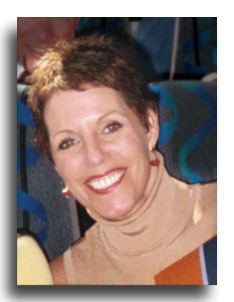 Sheila Rittenberg is the Director of Advocacy at the National
Psoriasis Foundation (Portland, Oregon). I began my interview with Sheila
knowing little about how the Foundation defined “Advocacy” or what
Sheila’s job entailed. If I had to sum up what I’ve learned, I would say
as Director of Advocacy Sheila must be a powerful persuader and motivator.
Sheila Rittenberg is the Director of Advocacy at the National
Psoriasis Foundation (Portland, Oregon). I began my interview with Sheila
knowing little about how the Foundation defined “Advocacy” or what
Sheila’s job entailed. If I had to sum up what I’ve learned, I would say
as Director of Advocacy Sheila must be a powerful persuader and motivator.  Rittenberg:
It's interesting, but one of the things we've struggled with at the
Foundation is what to call this area of work so that people “get it.” When
we describe our activities as “Advocacy,” it means nothing to some people,
means the wrong thing to others and there are also people who are
intimidated by the word. To us, Advocacy is bringing the voice of
psoriasis patients to government and business decision-makers to improve
conditions for those with psoriasis. Advocacy is standing up for what
patients need. Advocacy is fighting for a cure. What sets us apart is that
we believe that Advocacy is also empowering and engaging people in the
community to do this work. Advocacy will never mean anything if the
people-power is not behind the effort. But to be effective as a psoriasis
advocate, it doesn't mean you have to march up the steps of Capitol Hill
and run meetings with legislators. For some, Advocacy is going to Congress
and helping us lobby for increased funding to support psoriasis research.
For others, it's going to their local school or community group and
finding a way to educate about the disease. Some people are advocates by
appealing insurance decisions for the treatments they need. The important
thing is that people take action when they are psoriasis advocates. They
speak out, step up, get informed. One small action a day across a
community can add up to a groundswell of impact.
Rittenberg:
It's interesting, but one of the things we've struggled with at the
Foundation is what to call this area of work so that people “get it.” When
we describe our activities as “Advocacy,” it means nothing to some people,
means the wrong thing to others and there are also people who are
intimidated by the word. To us, Advocacy is bringing the voice of
psoriasis patients to government and business decision-makers to improve
conditions for those with psoriasis. Advocacy is standing up for what
patients need. Advocacy is fighting for a cure. What sets us apart is that
we believe that Advocacy is also empowering and engaging people in the
community to do this work. Advocacy will never mean anything if the
people-power is not behind the effort. But to be effective as a psoriasis
advocate, it doesn't mean you have to march up the steps of Capitol Hill
and run meetings with legislators. For some, Advocacy is going to Congress
and helping us lobby for increased funding to support psoriasis research.
For others, it's going to their local school or community group and
finding a way to educate about the disease. Some people are advocates by
appealing insurance decisions for the treatments they need. The important
thing is that people take action when they are psoriasis advocates. They
speak out, step up, get informed. One small action a day across a
community can add up to a groundswell of impact.  The
good news is, all that is changing. New drugs have hit the market, there
is more media attention on psoriasis and now doctors, with a new
understanding about how psoriasis works, are more enthusiastically
treating patients. All of this results in more money being invested in
psoriasis, more research leading to a better understanding of the disease,
and more work towards finding a cure. If I were doing this job 10 or even
5 years ago, I think the challenge would be much more difficult. Today, we
are at the right place at the right time.
The
good news is, all that is changing. New drugs have hit the market, there
is more media attention on psoriasis and now doctors, with a new
understanding about how psoriasis works, are more enthusiastically
treating patients. All of this results in more money being invested in
psoriasis, more research leading to a better understanding of the disease,
and more work towards finding a cure. If I were doing this job 10 or even
5 years ago, I think the challenge would be much more difficult. Today, we
are at the right place at the right time.
 These
groups are a part of our organization. We have expectations of them and
they also benefit from being part of a national organization — for
example, getting help with mailing lists, web sites, etc. So, in answer to
your question, yes, I do feel that helping local support groups is a valid
role for the National Psoriasis Foundation to pursue. Is this a valid role
for Advocacy? – Not directly. And it’s not the Advocacy department that
manages development of support groups. The Foundation has a support group
manager and a recently added volunteer manager. Together, the Advocacy and
Outreach staff’s grassroots efforts will create momentum and engagement
that will make an impact.
These
groups are a part of our organization. We have expectations of them and
they also benefit from being part of a national organization — for
example, getting help with mailing lists, web sites, etc. So, in answer to
your question, yes, I do feel that helping local support groups is a valid
role for the National Psoriasis Foundation to pursue. Is this a valid role
for Advocacy? – Not directly. And it’s not the Advocacy department that
manages development of support groups. The Foundation has a support group
manager and a recently added volunteer manager. Together, the Advocacy and
Outreach staff’s grassroots efforts will create momentum and engagement
that will make an impact. Rittenberg:
We are taking the fight for more awareness and
support for psoriasis to Congress through local communities in August,
Psoriasis Awareness Month. The National Psoriasis Foundation’s Local Lobby
Week, August 15-19, is another opportunity to speak out about psoriasis
and psoriatic arthritis and the importance of research. There will be
hundreds of people across the country signing up online (check
Rittenberg:
We are taking the fight for more awareness and
support for psoriasis to Congress through local communities in August,
Psoriasis Awareness Month. The National Psoriasis Foundation’s Local Lobby
Week, August 15-19, is another opportunity to speak out about psoriasis
and psoriatic arthritis and the importance of research. There will be
hundreds of people across the country signing up online (check
 Having
said this, the National Psoriasis Foundation is the largest psoriasis
association in the world, and other countries look to us for guidance and
leadership. The Foundation’s membership in the International Federation of
Psoriasis Associations (IFPA) and participation on other international
committees puts the Foundation in an influential position. Over the last
year, the Foundation has given support and direction to people in
different countries on how to start psoriasis associations, communicate
with their members, and develop their mission. This international guidance
that we provide is recognized by dermatology and rheumatology leaders in
the United States.
Having
said this, the National Psoriasis Foundation is the largest psoriasis
association in the world, and other countries look to us for guidance and
leadership. The Foundation’s membership in the International Federation of
Psoriasis Associations (IFPA) and participation on other international
committees puts the Foundation in an influential position. Over the last
year, the Foundation has given support and direction to people in
different countries on how to start psoriasis associations, communicate
with their members, and develop their mission. This international guidance
that we provide is recognized by dermatology and rheumatology leaders in
the United States.  Rittenberg:
Working for more psoriasis research and towards
a cure is obviously crucial. We know, however, that while that work is
going on, there are thousands of people suffering because they cannot get
access to the treatments they need. Health insurance is a very significant
problem for people with psoriasis and for that reason, a portion of our
Advocacy department is dedicated to improving access to treatments. We
educate insurers about what psoriasis is and how it affects people. Many
of the policies that are used to approve patients on treatments have been
set up without a real understanding of the impact of this disease.
Psoriasis is still misunderstood, still under-treated, still “silent.”
Rittenberg:
Working for more psoriasis research and towards
a cure is obviously crucial. We know, however, that while that work is
going on, there are thousands of people suffering because they cannot get
access to the treatments they need. Health insurance is a very significant
problem for people with psoriasis and for that reason, a portion of our
Advocacy department is dedicated to improving access to treatments. We
educate insurers about what psoriasis is and how it affects people. Many
of the policies that are used to approve patients on treatments have been
set up without a real understanding of the impact of this disease.
Psoriasis is still misunderstood, still under-treated, still “silent.”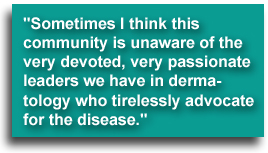 Rittenberg:
Dermatologists play a very important role advocating for psoriasis!
Sometimes I think that this community is unaware of the very devoted, very
passionate leaders we have in dermatology who tirelessly advocate for the
disease. They may be working on improving the science of the disease or
the tracking of patients so that there is a body of knowledge informing
decisions by policy makers. They may be fighting to change insurance
coverage decisions for their patients. We know many doctors who regularly
send letters to insurers, the attorney general and others in their
communities to advocate on behalf of their patients. There are also some
20 dermatologists and rheumatologists who volunteer for the National
Psoriasis Foundation Medical Board, providing guidance and leadership to
the Psoriasis Foundation on all medical issues relative to the psoriasis
and psoriatic arthritis patient community (see
Rittenberg:
Dermatologists play a very important role advocating for psoriasis!
Sometimes I think that this community is unaware of the very devoted, very
passionate leaders we have in dermatology who tirelessly advocate for the
disease. They may be working on improving the science of the disease or
the tracking of patients so that there is a body of knowledge informing
decisions by policy makers. They may be fighting to change insurance
coverage decisions for their patients. We know many doctors who regularly
send letters to insurers, the attorney general and others in their
communities to advocate on behalf of their patients. There are also some
20 dermatologists and rheumatologists who volunteer for the National
Psoriasis Foundation Medical Board, providing guidance and leadership to
the Psoriasis Foundation on all medical issues relative to the psoriasis
and psoriatic arthritis patient community (see