Catie Coman
Director of Communications
for the National Psoriasis Foundation
Interviewed by Ed
Dewke
in February, 2009

Catie Coman joined the National Psoriasis
Foundation in 2006 to manage the organization's membership and
annual giving program. In 2008, she became the director of
communications. She does not have psoriasis, but, as a type 1
(insulin dependent) diabetic, she is no stranger to autoimmune
disease. Catie says her diabetes “has helped me tremendously in my
work here. It has given me a kind of sensitivity in communicating
that I might not otherwise have cultivated.”
I met Catie Coman in August, 2008, when we were
co-panelists at the Psoriasis Web Sites session at the Foundation’s
annual meeting in Orlando. Her aspirations for Foundation
communications projects — which she talks about in this interview —
excited all of us on the panel. I attended two strategic planning
meetings and the panel session and left Orlando feeling I was part
of a team that included the National Psoriasis Foundation.
Coman has more than 15 years working in the
nonprofit sector, focusing on organizational development,
communications and fundraising. Ms. Coman has a Bachelor of Arts
degree in public relations from San Jose State University and a
Master of Arts in communication studies from University of Portland.
At the moment, she is embroiled in a complete redesign and rebuild
of
www.psoriasis.org, the National Psoriasis Foundation’s
award-winning and very popular web site. -Ed
*****
DEWKE: What specifically constitutes the Foundation's
communications?
COMAN:
We produce both print and electronic communications. Specifically, we
have a patient magazine, Psoriasis Advance; a professional
magazine, Psoriasis Forum; we have a large — both in the number
of visitors and pages — Web site; four topic-specific e-newsletters on
advocacy, research, treatment and disease management, happenings in the
Foundation and walk for awareness updates. We also do direct mail
campaigns for fundraising and to announce specific events and
activities. We have a presence on Twitter, Facebook, and other social
networking sites; and we've dipped our toes into the great ocean of
YouTube as well. Additionally, we have a range of informational
booklets, fact sheets and other printed educational materials on psoriasis and
psoriatic arthritis.
DEWKE:
What are the most important changes being made to the Foundation's
communications strategies and projects?
 COMAN:
We’ve done quite a bit of changing, but here are some of the highlights.
We are focusing on cementing our reputation as the “go to” organization
for all things psoriasis and psoriatic arthritis. Therefore we are being
much more proactive in our communications; e.g., reporting on the
science and medical breakthroughs as they happen, serving as a clearinghouse for psoriasis
and psoriatic arthritis information and generating our own data and trend information
— in particular the psycho-social impacts — of psoriatic diseases.
COMAN:
We’ve done quite a bit of changing, but here are some of the highlights.
We are focusing on cementing our reputation as the “go to” organization
for all things psoriasis and psoriatic arthritis. Therefore we are being
much more proactive in our communications; e.g., reporting on the
science and medical breakthroughs as they happen, serving as a clearinghouse for psoriasis
and psoriatic arthritis information and generating our own data and trend information
— in particular the psycho-social impacts — of psoriatic diseases.
We also are
opening up our communications to include what I call “citizen
journalists” those people in the community who want to talk about the
Foundation and issues in the psoriasis community either on our Web site
or on their own. We are embracing the whole
Web 2.0
idea as it translates to helping people get connected with others, manage their disease and work as a community toward finding a cure.
Finally, we
are working to communicate to those “niche” audiences: parents of kids
with psoriasis, people with psoriatic arthritis, pregnant women, teens,
etc. We’re moving away from the “one-size-fits-all” message to much more
targeted communications in response to the immense variability of our
constituents and their particular information needs.
DEWKE:
How much of the Foundation's communications are directed to non-members
— the public at large — and how does that happen?
COMAN:
We do quite a bit about psoriasis that is directed to the world at
large. This takes the form of letters to the editor, blog posts, press
releases, pitch letters to reporters and white papers. Our overarching
message to the general public is to take psoriasis and psoriatic
arthritis seriously: Psoriasis is a noncontagious, chronic, autoimmune
disease that affects as many as 7.5 million Americans. For millions of
people it is a painful, disfiguring and life-altering disease that
deserves increased resources to find better treatments and a cure.
 DEWKE:
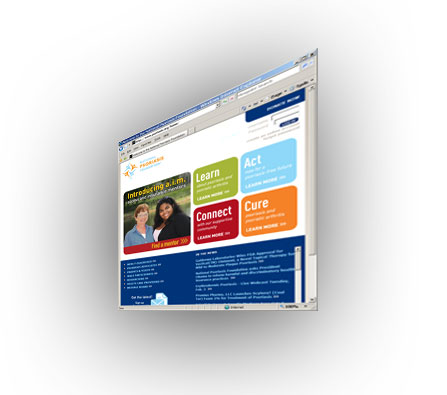
The new
look
for the Foundation's web site —
psoriasis.org —
was unveiled late last year. Other than design, what do you consider its
most significant improvement?
DEWKE:
The new
look
for the Foundation's web site —
psoriasis.org —
was unveiled late last year. Other than design, what do you consider its
most significant improvement?
COMAN:
That's a tough question because we essentially redid our site from top
to bottom — so there are a lot of changes I consider significant.
Probably the most significant is that we are in the process of bringing
online a whole new backend to our site. This has a robust content
management system (CMS), which will allow us to present the user with
information and news that he or she has indicated is of interest. So for
example, if you tell us you have psoriatic arthritis and are interested
in becoming an advocate, we can push information to you on those
topics. So the experience the visitor will have at our site is much more
personalized, much more relevant to his or her issues and interests.
Additionally, in the spirit of being the "go-to" organization on all
things psoriasis and psoriatic arthritis, we are constantly updating our
site; e.g., through the newsfeed found on our homepage. It is our goal
for people to come to our site not just to get disease information, but
to learn about events in their community, latest breakthroughs in the
world of psoriasis and how to be an advocate for a cure.
DEWKE:
The idea of being able to “tell” psoriasis.org that I want to be
kept current about this, that, and the other is exciting. What will I —
the member-user — have to do to make that happen?
COMAN:
The number one thing the user must do to make it happen is to go on
psoriasis.org, create an
online account and tell us your preferences by answering some questions.
Then to see the information of interest to you, you must log onto the
site when you visit. Otherwise, we won’t know who you are and
subsequently, what you like.
DEWKE:
How does the
Foundation stay in touch with its membership? What are the mechanisms in
play for hearing from us?
 COMAN:
We encourage people to talk back to us at almost every juncture.
We post our e-mail addresses, encourage letters to the editor and
monitor the blogosphere. We are expanding into social networking on
sites such as Facebook and Twitter. We read the message boards often.
Overall, it is a priority for us to provide a place for people to
discuss their psoriasis and/or psoriatic arthritis and to give us
feedback on the activities of the Foundation, alert us to what's going
on in their area and tell us their story. We respond to almost every
e-mail and call we receive. Because we are limited in resources, it's a
priority for us to cultivate citizen journalists — people with
psoriatic disease who can take our message out in their communities and
to the wider world. A diversity of opinions is also very important in
this type of work and very important to understanding these diseases.
COMAN:
We encourage people to talk back to us at almost every juncture.
We post our e-mail addresses, encourage letters to the editor and
monitor the blogosphere. We are expanding into social networking on
sites such as Facebook and Twitter. We read the message boards often.
Overall, it is a priority for us to provide a place for people to
discuss their psoriasis and/or psoriatic arthritis and to give us
feedback on the activities of the Foundation, alert us to what's going
on in their area and tell us their story. We respond to almost every
e-mail and call we receive. Because we are limited in resources, it's a
priority for us to cultivate citizen journalists — people with
psoriatic disease who can take our message out in their communities and
to the wider world. A diversity of opinions is also very important in
this type of work and very important to understanding these diseases.
DEWKE:
What would you consider the most important consequence of a
well-informed membership?
COMAN:
We want people to live well with psoriasis, to know the risks and to
take charge of their health. We want people with psoriasis to feel a
sense of control and power by knowing that there is something they can
do about it — whether it be go see a dermatologist to try a different
treatment or get involved in advocating lawmakers for more
federal attention to these diseases. We want people to go out in
their communities and say, "Our time is now! We need more research on
these diseases; we need better treatments; we need access to health
care; and we need people to understand that psoriasis is serious."
DEWKE:
One of the things that came up in the Psoriasis Web Sites panel at the
2008 annual meeting in Orlando was the use of rich media, meaning video,
audio and interactive technologies like “webinars.” Is any of that
planned for psoriasis.org? If so, what applications have you in
mind and how soon do you think we’ll be enjoying them?
COMAN:
Yes, we have an education webinar planned for March 31st. Check out
www.psoriasis.org in early March
for more information. We are expanding into video with our YouTube
channel and plan to implement other Web 2.0 technologies as
appropriate and as our resources allow.
 DEWKE:
You participated in the web sites panel with us at the annual meeting
in August and joined us in conceptualizing a gateway called “PSites.” It
would be a single separate psoriasis site with the express purpose of
holding links to the diverse and growing number of “alternative”
psoriasis web sites, blogs and online communities. Our hope was (and is)
that the Foundation will find a link to PSites warranted. Do you still
think this is a likely way for alternative psoriasis web sites to be
noticed by the tremendous international audience of users who tap into
psoriasis.org?
DEWKE:
You participated in the web sites panel with us at the annual meeting
in August and joined us in conceptualizing a gateway called “PSites.” It
would be a single separate psoriasis site with the express purpose of
holding links to the diverse and growing number of “alternative”
psoriasis web sites, blogs and online communities. Our hope was (and is)
that the Foundation will find a link to PSites warranted. Do you still
think this is a likely way for alternative psoriasis web sites to be
noticed by the tremendous international audience of users who tap into
psoriasis.org?
COMAN:
It is our plan to link to PSites to provide our users with other
opinions and experience regarding psoriasis. We know that people with
psoriasis are active online and we want to encourage our users to
explore other sites to get a more “well-rounded” understanding of
psoriasis and how it affects people physically as well as emotionally.
We will be finished with the full launch by May. At that time you may
expect to see a revamped “online resources” page that will include
PSites. Right now, we are still finessing our site content — with
approximately 1,400 pages, it is quite a job!
DEWKE:
Catie, thank you for your time and the uplifting vision you bring to
National Psoriasis Foundation communications. For all of us, it is a
brighter future with you in the picture.
#####
Visit, join and create an online
account at
http://www.psoriasis.org
For more about PSites, visit
http://flakehq.com/psites
FlakeHQ
Interviews Home
www.flakehq.com
 Mar-Apr '09 |
briefing |
mail | interviews
| articles |
psorchat
|
don't
say this |
flaker
creativity | flakers' jargon |
other
places | archives | send
mail | ed dewke | search |
acknowledgments
| legal
stuff
| Flake: Confessions of a Psoriatic
| ©2009 FlakeHQ, Inc.
Mar-Apr '09 |
briefing |
mail | interviews
| articles |
psorchat
|
don't
say this |
flaker
creativity | flakers' jargon |
other
places | archives | send
mail | ed dewke | search |
acknowledgments
| legal
stuff
| Flake: Confessions of a Psoriatic
| ©2009 FlakeHQ, Inc.